
You may have eaten your fair share of eggs in your life, but how much do you know about eggs really? Unless you grew up on a farm or raised chickens in your backyard, you might not even know that eggs aren’t always white! Truth is, there are lots of differences between farm eggs and the ones you can buy at the grocery store.
This post may contain affiliate links. As an Amazon Associate, I earn from qualifying purchases. See my Affiliate Disclosure.
So, you might be asking, which is better, farm fresh or store eggs? Read on for all the information you need to decide for yourself.
1. Source and Production Methods
The primary distinction between farm-fresh and store-bought eggs lies in their source and production methods.
Farm-Fresh Eggs:
- Typically laid by chickens raised on local farms.
- Chickens have access to open pastures, allowing them to roam freely.
- The hens engage in natural behaviors like scratching and foraging.
- They have a diverse diet including grains, seeds, insects, and other natural sources of nutrition.
Store-Bought Eggs:
- Produced on large-scale commercial farms.
- Chickens may be housed in confined spaces.
- Hens have limited freedom to roam and engage in natural behaviors.
- Their diet probably consists of commercial feed (which can be either organic or conventionally grown).
Understanding the origin of the eggs provides insight into the living conditions and dietary habits of the chickens, which affects the overall quality of the eggs produced.
2. Nutritional Content
One of the main reasons many people opt for farm-fresh eggs is the belief that they are more nutritious than their store-bought counterparts, and it’s true that farm eggs do contain higher levels of some nutrients thanks to the hens’ more diverse diets.
Farm-Fresh Eggs:
- Higher levels of omega-3 fatty acids, which are beneficial for heart health.
- Increased levels of vitamins A and E, as well as beta-carotene.
Store-Bought Eggs:
- Nutrient levels may be influenced by commercial farming practices.
- May have lower levels of omega-3 fatty acids.
- Variability in vitamin and mineral content.
While both types of eggs provide essential nutrients, farm-fresh eggs are often associated with a more robust nutritional profile.
3. Flavor and Freshness
One of the most noticeable differences between farm-fresh and store-bought eggs is the flavor.
Farm-Fresh Eggs:
- Have richer taste thanks to the chickens’ more diverse diet.
- Are often consumed shortly after being laid, maximizing freshness.
Store-Bought Eggs:
- The flavor may be affected by the amount of time spent in distribution channels.
- Some consumers find the milder or blander.
The freshness of farm-fresh eggs, paired with the diverse diet of pasture-raised chickens, contributes to a flavor that many enthusiasts find superior.
4. Egg Color and Shell Quality
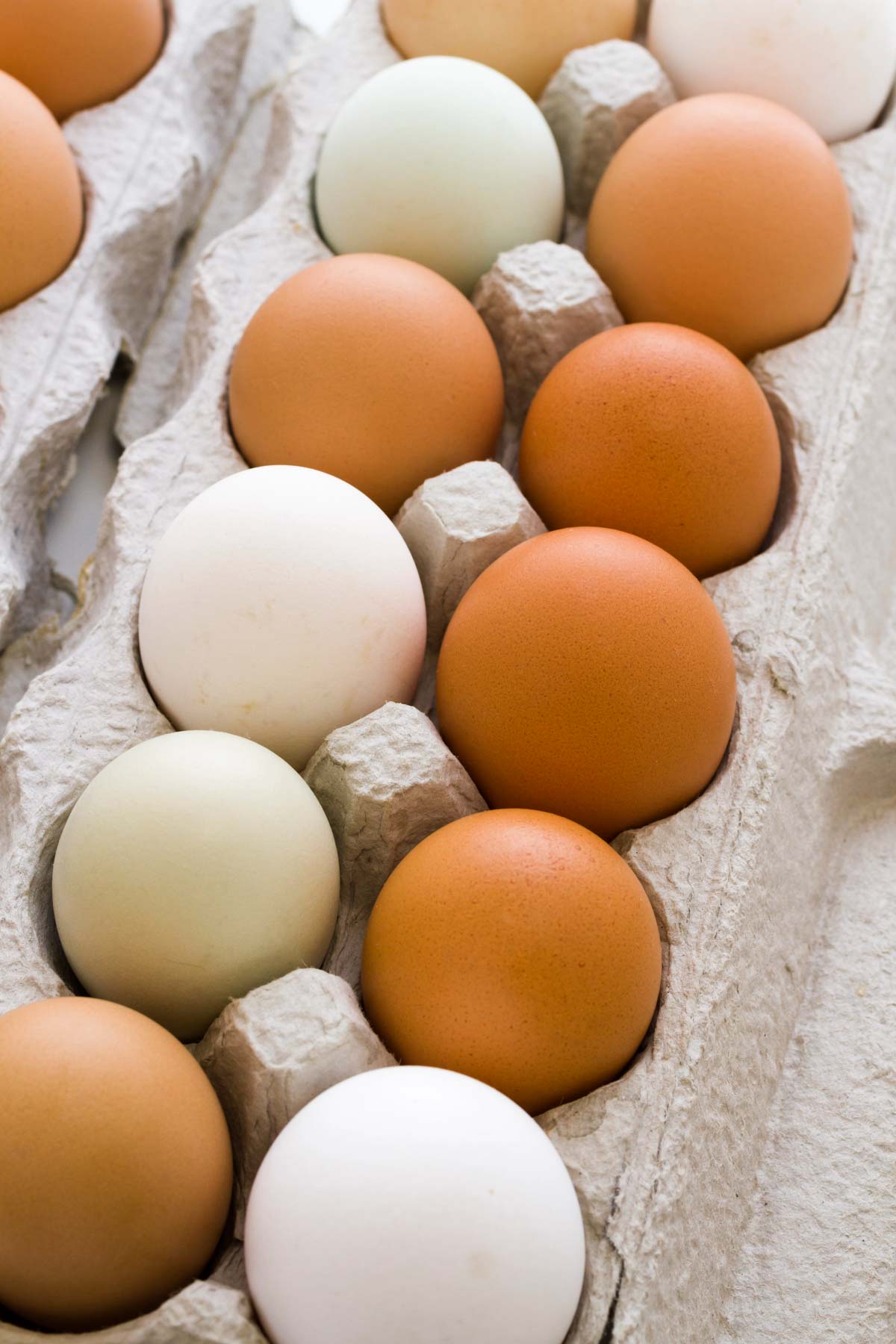
The color of an egg’s shell can vary depending on the breed of the chicken.
Farm-Fresh Eggs:
- Come in a range of colors, including brown, white, blue, or green thanks to the diversity of of chicken breeds.
Want to save this recipe?
Store-Bought Eggs:
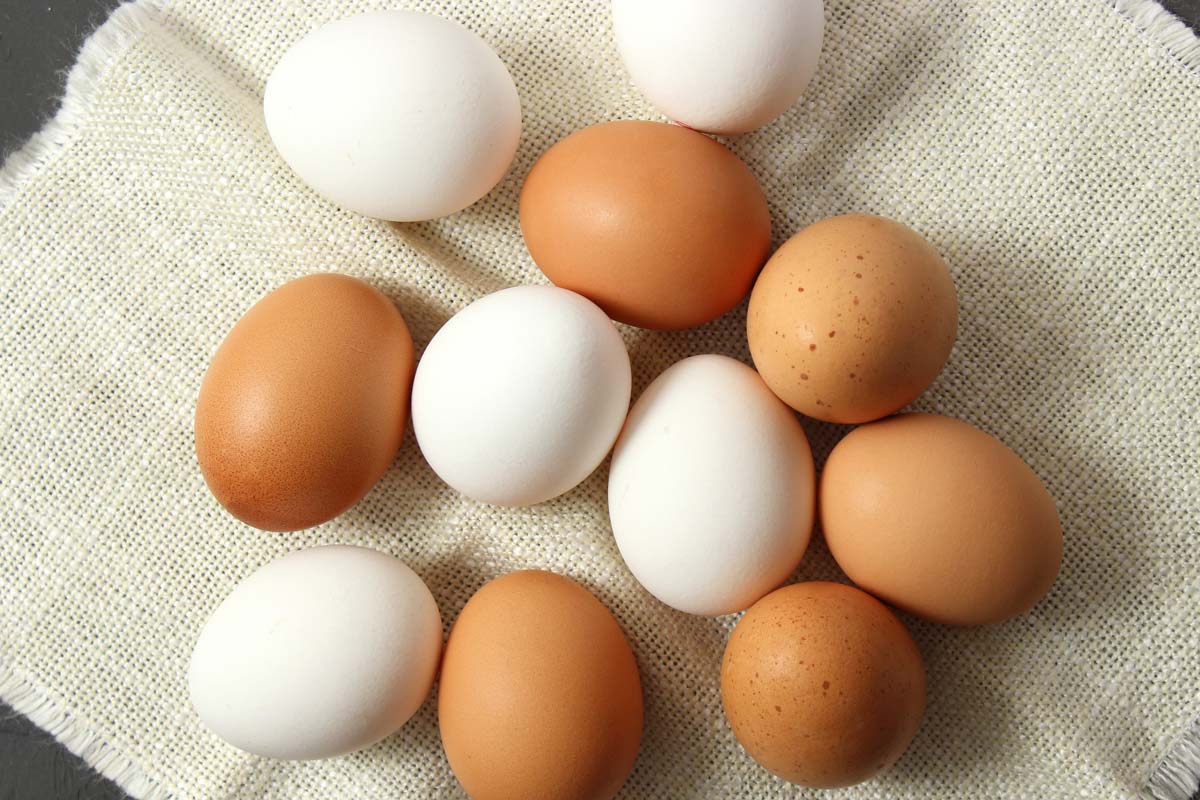
- Generally only come in white and brown varieties.
Shell quality is another factor that can differ between farm-fresh and store-bought eggs, with some arguing that farm-fresh eggs tend to have stronger and thicker shells.
5. Ethical Considerations
For many people, ethical considerations play a significant role in the choice between farm-fresh and store-bought eggs.
Farm-Fresh Eggs:
- Are often associated with more humane and environmentally friendly practices.
- Chickens on small, local farms have access to outdoor spaces.
- Are a better choice for those with ethical concerns about animal welfare.
Store-Bought Eggs:
- Large-scale commercial facilities may use intensive farming methods.
- There are concerns about crowded and confined conditions for chickens.
- Ethical considerations may include the use of antibiotics and environmental impact.
Understanding the ethical implications of egg production methods allows us to align our choices with our values and concerns.
6. Environmental Impact
The environmental impact of egg production is a crucial consideration for those seeking sustainable food choices.
Farm-Fresh Eggs:
- Local farms often employ more sustainable and environmentally friendly practices.
- Reduced transportation distance lowers carbon footprint.
Store-Bought Eggs:
- Large-scale production may contribute to higher carbon emissions.
- Transportation from commercial farms to distribution centers and retailers can increase environmental impact.
Choosing eggs with a lower environmental footprint can be an essential aspect of making eco-friendly food choices.
7. Cost
For many of us, cost is a practical factor that influences our purchasing decisions.
Farm-Fresh Eggs:
- May be more expensive due to smaller-scale production and higher quality standards.
- Prices can vary based on location and farming practices.
Store-Bought Eggs:
- Generally more affordable due to mass production.
- Prices may be subject to market fluctuations.
By understanding the forces that can affect the cost, you can make choices that align with your budget constraints.
Wrapping Up
In the debate between farm-fresh and store-bought eggs, personal preferences and priorities play a significant role. Farm-fresh eggs offer a connection to local agriculture, potential ethical advantages, and subtle differences in taste and appearance. On the other hand, store-bought eggs offer convenience, uniformity, and adherence to industry standards.
In the end, whether you choose farm-fresh or store-bought eggs, both choices bring valuable nutrients to your diet. As we become more mindful of what we eat, understanding the distinctions between these eggs empowers us to make informed decisions that align with our values and preferences.
Read more: How to cook the best fried eggs